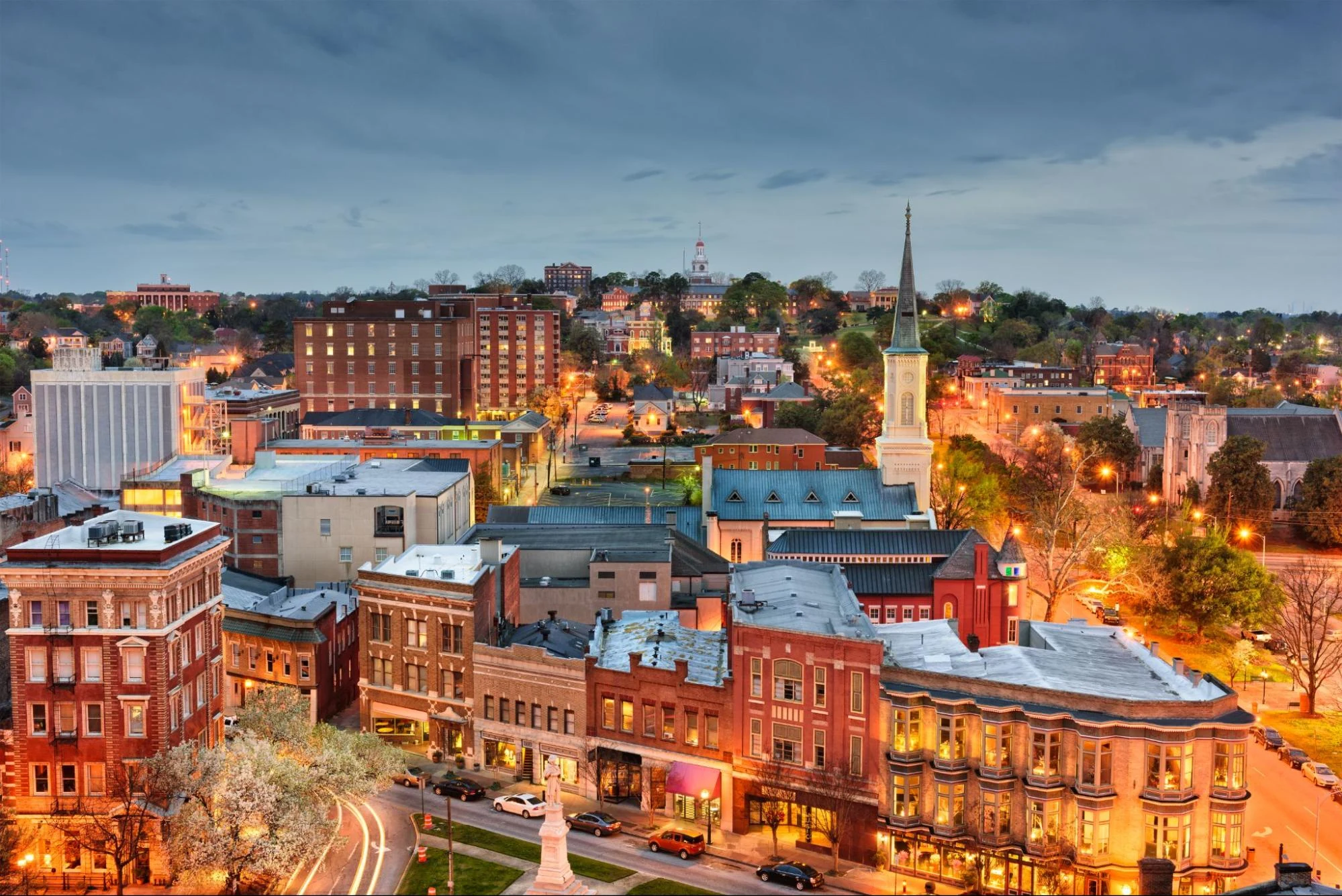
Plenty of the buildings we reroof downtown and around Mercer University were built long before TPO existed. EPDM's long track record and forgiving field-seaming make it a practical match for those older decks, and we still spec it regularly when the building calls for it.
EPDM has been installed on commercial roofs since the 1960s, which means we're not guessing at long-term performance the way we sometimes are with newer proprietary membranes. That history matters on institutional buildings, churches, and school facilities where a board or committee wants a system with a proven record before approving the expense.
The rubber membrane also tolerates movement and irregular deck conditions better than some rigid single-ply systems, which is useful on older buildings downtown where the original deck has settled slightly or carries decades of patch repairs underneath the current roofing.
We spec ballasted EPDM, loose-laid membrane held down with stone or paver ballast, where the structure can carry the added dead load and the building isn't in a high-wind exposure category. It's typically the lowest installed cost option and holds up well against the puncture risk of rooftop foot traffic.
For buildings that can't carry ballast weight, or that sit in a more exposed wind zone, we move to mechanically attached or fully adhered EPDM instead. Both hold to a documented wind uplift rating the way TPO does, and we carry that rating through the same submittal process regardless of attachment method.
EPDM seams are the system's known weak point if they're done poorly. We use manufacturer-specified splice adhesive and primer at every field seam rather than relying on general-purpose tape, and we probe seams during a post-installation walk before we sign off on the job.
On reroofing jobs where we're tying new EPDM into existing flashing or a partial recover, seam integrity at the transition gets extra attention, since that's where most EPDM leak calls originate years after installation.
EPDM isn't automatically the right call just because a building is old. We look at existing deck condition, wind exposure, rooftop equipment loading, and whether the owner wants a lighter, more reflective surface before we recommend EPDM over TPO or a recover assembly.
A good share of our EPDM work is repair and maintenance on roofs another contractor installed years earlier. We'll walk an unfamiliar EPDM roof, probe seams, check flashing at parapets and penetrations, and give an honest read on whether a section needs a patch, a partial recover, or a full replacement.
That inspection gets documented the same way our new-installation submittals are, with photos and a written condition assessment an owner can use for budgeting or an insurance claim. On buildings tied to a school board, church, or nonprofit budget cycle, we also break the recommendation into phased options so the decision-makers can weigh a smaller repair against a full replacement against their funding timeline.
A lot of the buildings we service around Poplar Street and the Mercer campus have shared parapet walls, narrow roof access, or limited crane setup room, conditions that shape how an EPDM job gets staged more than the membrane spec itself. We plan material hoisting and debris removal around those constraints during the site walk rather than discovering them the morning the crew arrives.
For occupied buildings downtown, that also means coordinating loud tear-off work and material deliveries around tenant hours, particularly where retail or restaurant space sits below the roof we're working on. Where street parking or a narrow alley is the only access point, we'll also work out a material staging plan with the owner ahead of time rather than blocking a shared right-of-way without notice. On several of these downtown jobs we've had to hand-carry rolled membrane up a stairwell rather than crane it onto the roof, and we price that added labor into the proposal instead of surprising the owner with a change order once the crew discovers the access problem on day one.
Ballasted EPDM is typically the lower-cost option among single-ply systems, though fully adhered EPDM can run close to TPO pricing. We quote both so you can compare against your building's specific needs.
Black membrane absorbs more solar heat than white TPO or reflective coatings, which can affect a building's cooling load. For buildings where that matters, we'll discuss a reflective coating over EPDM or a switch to a lighter-colored system.
EPDM has reasonable impact resistance, though severe hail can still cause damage. We inspect after major storm events and document any impact marks for the owner's record.
We cut back the failed splice, clean and prime both membrane edges, and reseam with manufacturer-specified adhesive rather than patching over the top of a failing seam.
Where the existing membrane and manufacturer are still available and in acceptable condition, yes. Where they aren't, we'll recommend the closest current equivalent and explain the transition detail in the scope.